
If you’ve been reading or listening to tech news, one term you may have heard used increasingly is “Web 3.0.” What is it? Is it just the newest buzzword techies are throwing around? How will it impact our lives? Web, of course, refers to the World Wide Web. Tim Berners-Lee coined the term and he created the foundational technologies of the web:
- HTML (HyperText Markup Language) – language used to build websites
- URI or URL (Uniform Resource Identifier or Locator) – web address
- HTTP (HyperText Transfer Protocol) – protocol used to transfer data over the Web
Before going into Web 3.0, here is a quick look at its predecessors.
Web 1.0
The mid 1990s ushered in Web 1.0. This was the age of dial-up modems, static web browsers like Netscape, and AOL and MSN messenger. Users at the time were astounded with e-mails and real time news online.
Web 2.0
In the last 15 to 20 years, the web transformed to how we know it today. It is the era of content creation, interactivity, and social connectivity. The web became a platform for user-generated content and apps for almost every aspect of life. Mobile devices and Web 2.0-centric companies are common and available to about half of the world’s population.
Web 3.0
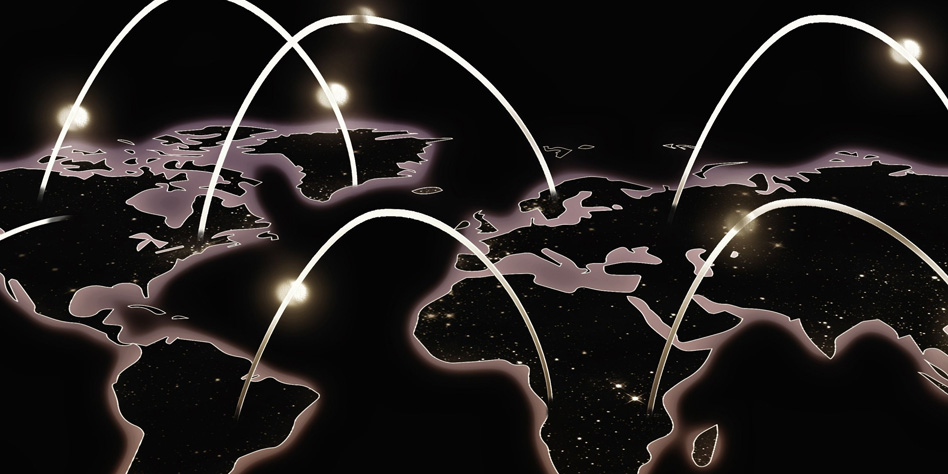
Web 3.0 is the next generation that’s expected to bring a great paradigm shift in how people use the web. Decentralization, openness, and greater user utility are at the heart of this new phase. It is fascinating to note that Berners-Lee have spoken of these concepts in the 1990s. “No permission is needed from a central authority to post anything on the web, there is no central controlling node, and so no single point of failure...and no ‘kill switch’! This also implies freedom from indiscriminate censorship and surveillance,” speaking about decentralization. And on openness, he said, “Instead of code being written and controlled by a small group of experts, it was developed in full view of everyone, encouraging maximum participation and experimentation.”
Key Properties of Web 3.0
Web 3.0 or Semantic Web (also conceived by Berners-Lee) has these main features:
• Open – it will be run by open-source software developed by an open developer community and anyone can view the accomplishments
• Trustless – frees users to interact publicly and privately without exposure to risk
• Permissionless – engagement between users and providers do not need the permission of a controlling organization
• Universal – internet will be made available to anyone at any time and from any place
Layers of Web 3.0
1. Edge computing – “information processing is located close to the edge—where things and people produce or consume that information,” as defined by Gartner. This means that there will be less reliance on retrieving data from a central location that may be far away. The development of IoT devices and 5G make this possible.
2. Decentralized network – Analytics Steps states that decentralized networks “allow different data producers to sell or exchange their data without losing ownership, jeopardizing privacy, or relying on middlemen. As a result, in the emerging 'data economy,' decentralized data networks will have a large list of data providers.” This means that the users will be in control of this data. You can sell or trade data without losing ownership, risking privacy, or relying on middlemen.
3. Artificial intelligence (AI) and machine learning – when algorithms for AI and machine learning are built on top of decentralized networks, they can make valuable and objective predictions that make for truthful data.
4. Blockchain – the foundation of Web 3.0. The use of smart contracts will make internet searches faster, more efficient, and more relevant.
Impact of Web 3.0 on Cryptocurrency
Web 3.0 or Web3 will rely on cryptocurrencies. Crypto tokens are digital assets that will be associated to making a decentralized internet. An example is users getting paid in crypto in exchange for the data they choose to sell or make available. If you have enough crypto, you can have a say on the governance and operation of protocols on the network. Web3 also envisions that crypto will be used to acquire goods and services on the decentralized network. Simply put, as Web3 creeps in, users will need crypto more than fiat.
Even if we are still in the initial stages of Web3, owners of Monero crypto tokens need to get a crypto wallet that supports Monero. XMRWallet is a web-based, anonymous, open-source Monero wallet. There’s no need to download any software. It has multiple language support and absolutely free, even the import of past transactions. Get XMRWallet now as you get ready for Web 3.0.
