

Cryptocurrency trading continues to grow in popularity despite criticisms, increasing regulations, and the level of risk involved. If you’re new to crypto or thinking about getting into crypto, one of the oft-repeated tips is to do your research. Read on to learn about cryptocurrency exchanges before you hop on one.
Crypto exchanges are platforms where you can buy or sell cryptocurrencies. Acquiring crypto from exchanges is more practical for most people than mining. Users can access them through web browsers or through mobile apps. Forbes Advisor reports there are almost 600 exchanges around the world. Some exchanges offer margin accounts and futures trading for the more experienced crypto investors. Others offer crypto staking, crypto loans, a learning space about anything crypto, custodial services for your coins, and NFT marketplaces. There are some cryptocurrencies that are not available in some exchanges, and you may need to go to another one to get the coin you want.
Types of Crypto Exchanges
A centralized crypto exchange (CEX) is run by a company and they are required to abide by regulations, such as identity verification or know-your-customer (KYC), where they operate. Some examples are Binance, Kraken, Gemini, and Bitfinex.
The strengths of CEXs are:
• Speed - Most CEXs run on centralized servers, which completes trade orders quickly.
• Accepts traditional currency (fiat) - you can replenish and withdraw digital assets using via bank accounts, credit or debit cards, or payment apps.
• Liquidity - the accessibility of CEXs attracts more users and results to higher trading volumes and liquidity. You can deposit and withdraw funds quickly.
• Ease of use - CEXs have user-friendly interfaces, analytic tools, and other services that make crypto trading more convenient.
The weaknesses of CEXs are:
• KYC policies - users lose significant privacy by providing personal and financial information for KYC
• Custodial - leaving your crypto in a CEX’s wallet allows them to have authority over your digital assets.
• Hacks - cyber criminals also know that CEXs hold large amounts of users’ funds and they are an excellent target for bad actors.
• Susceptible to sanctions - as a legal entity, CEXs may be subject to limitations and sanctions from a governing body.
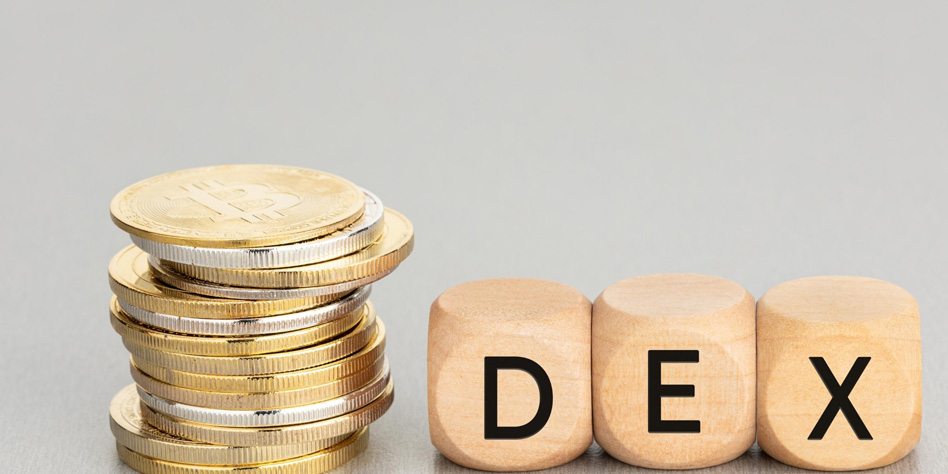
A group of individual or entities runs a decentralized crypto exchange (DEX). There is no single party that makes governance or policy decision on how it will operate. It offers direct or peer-to-peer (P2P) trades between users. Transactions are completed by using smart contracts. PancakeSwap, SushiSwap, and Uniswap are three of the most popular DEXs.
The strengths of DEXs:
• Privacy - a DEX does not require KYC. You only need to connect your crypto wallet.
• Security - DEXs are non-custodial, and you have custody of your private keys.
• Censorship-resistant - government officials and regulators cannot interfere with transactions directly.
• Low fees - without intermediaries, transactions fees are lower.
• More crypto choices - it is easier and faster to list new coins on a DEX because the offerings are not limited to the agenda of a centralized system.
Inclusion of decentralized finance (DeFi) and non-fungible tokens (NFT)- DEXs give access to users who would like to avail of DeFi services and NFT projects.
The weaknesses of DEXs are:
• Limited trading features - margin trades, limit orders, futures, and options are usually unavailable.
• Less efficiency and speed - by using smart contracts, consensus will take time and this affects the time to complete transactions.
• Lack of customer support - as DEXs offer direct exchanges between users, they may have to resolve problems on their own.
• No fiat on-ramp - you can only use crypto to trade.
• Less user-friendly - the interface on most DEXs is more difficult to navigate and understand.
Both types of exchanges have their pros and cons. Your choice will depend on your needs, your values, your temperament, your needs and what you are looking for in terms of privacy, speed, and security. Keep an eye out for the second part of this article, which will cover other things you need to consider when choosing a crypto exchange.
As you begin your cryptocurrency journey, protecting your digital assets is just as important as deciding which crypto token to invest in and which crypto exchange to get them from. Among the many ways to keep your crypto safe is using your own crypto wallets . Investopedia defines a crypto wallet as a digital wallet that enables users to store, manage, and trade their tokens. Security experts will tell you not to leave a sizeable chunk of your digital portfolio in exchanges and store them in crypto wallets instead.
If you decide to include the top privacy coin Monero in your digital portfolio, check out XMRWallet. It allows you to send and receive Monero instantly on the blockchain, while remaining in control of your XMR and keys. XMRWallet is open-source and allows you to use Monero without requiring you to download any software. It has multiple language support. Best of all, it’s completely free, including importing previous transactions. Registration is not required, and it’s easy to use. Create your account now and take advantage of everything XMRWallet offers. Using XMRWallet for your Monero coins will expand the privacy and anonymity that Monero provides.
