

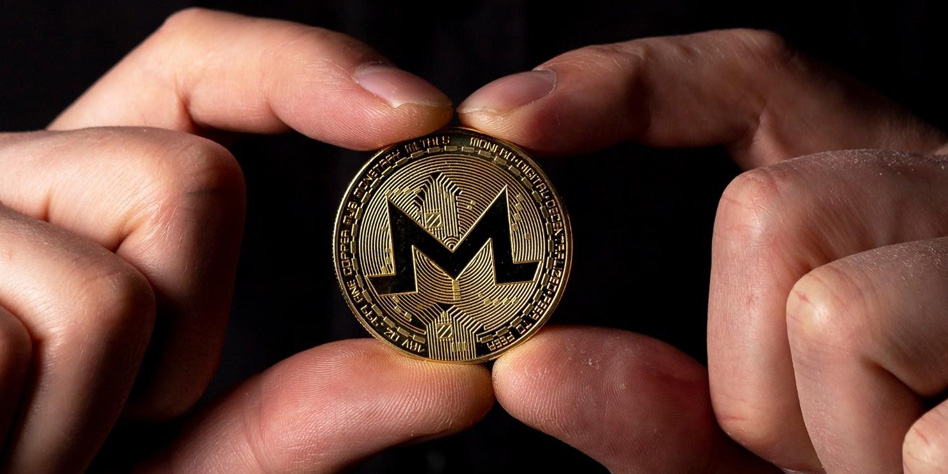
Mention Monero in certain circles and the reactions are predictable: it's associated with dark web activity, criminal use, and regulatory hostility. It lacks the celebrity endorsements and mainstream recognition that Bitcoin, Ethereum, and even memecoins receive. Regulatory agencies have offered bounties to crack its privacy. Centralized exchanges in multiple jurisdictions have delisted it. Several countries have explicitly restricted or banned it.
And yet, as of 2026, Monero remains the most widely used and technically capable privacy-focused cryptocurrency by any serious measure. Understanding why requires looking past the headlines at what actually drives demand for financial privacy tools.
The Regulatory Picture in 2026
The regulatory pressure against Monero has been real and ongoing. The IRS offered a $625,000 bounty in 2020 for contractors who could break XMR's privacy layer — a public acknowledgment that the agency could not effectively trace it through conventional methods. Anti-money laundering compliance requirements have led exchanges including Bittrex, OKEx's South Korean subsidiary, Kraken UK, and Huobi Global to remove privacy coins from their offerings. Japan, South Korea, and Australia have enacted exchange-level restrictions that effectively prevent regulated platforms in those countries from listing XMR.
This regulatory pressure redirected XMR acquisition rather than eliminating it. When LocalMonero closed in May 2024, P2P trading volume migrated to Haveno DEX and atomic swap tools. Bitcoin-to-Monero atomic swaps — fully trustless, requiring no exchange — have been available in production since 2021 and provide an acquisition path that no regulatory action can easily eliminate. The community-driven nature of Monero's development means there is no single target for enforcement action comparable to what happened with Tornado Cash.
What Makes Monero Different From Other Privacy Coins
The privacy coin category includes Monero, Zcash, Dash, and others, but they differ fundamentally in how they implement privacy. This distinction matters for understanding why Monero has maintained its position while others have not.
Most other "privacy coins" offer optional or selective privacy — you can send a transparent transaction or a shielded one. Zcash supports optional shielded transactions, but the majority of Zcash transactions have historically been unshielded. Dash's mixing features are opt-in. Optional privacy creates a privacy problem: the act of choosing privacy marks you as someone who wanted to hide something. Surveillance-based analysis can still identify which outputs were mixed and treat them with additional scrutiny.
Monero's privacy is mandatory. Every transaction — without any user configuration — uses ring signatures to conceal the sender, stealth addresses to protect the recipient, and RingCT to hide the amount. There is no "unshielded Monero transaction." This means that all XMR is indistinguishable from all other XMR — the blockchain contains no useful information for distinguishing a privacy-motivated transaction from any other. This is what makes Monero genuinely fungible where other coins are not.
The Civil Liberties Case
Coin Center and the Electronic Frontier Foundation (EFF) have explicitly argued that anonymous digital transactions are a component of civil liberties — not an instrument of criminality. Their position: financial privacy is a fundamental aspect of personal freedom, and treating all privacy-seeking financial behavior as suspicious inverts the presumption of innocence.
The actual user base for Monero reflects this. Privacy-focused individuals who want their financial activity to remain unmonitored by marketers, employers, or governments. People escaping domestic abuse who need their financial activity hidden from a controlling partner. Journalists and activists in countries with authoritarian governments. Businesses that prefer not to expose competitive transaction data on a public ledger. These are not marginal use cases — they represent legitimate, important reasons that financial privacy tools exist.
Where Monero Stands in 2026
Monero continues to rank among the top privacy-focused digital assets by trading volume and community activity in 2026. The Seraphis protocol under development by the Monero Research Lab will further strengthen its cryptographic foundation. P2Pool has decentralized its mining base. Haveno DEX provides a community-endorsed acquisition path.
Whether to hold Monero is a personal decision that involves your assessment of the regulatory landscape in your jurisdiction, your privacy values, and your investment risk tolerance. As with any asset: research thoroughly, understand what you own and why, and only allocate what you are prepared to hold through volatility.
For storing and transacting with XMR, XMRWallet is free, open-source, non-custodial, and works on any device with a browser.
Frequently Asked Questions
Has anyone successfully traced a Monero transaction?
No publicly confirmed break of Monero's core cryptographic privacy layer has been demonstrated as of 2026. The IRS bounty from 2020 produced contractor submissions but no confirmed public claim of successfully tracing XMR through cryptographic means. Monero transactions have in some cases been linked to real-world activity through non-cryptographic means — such as exchange KYC records for the purchase or sale of XMR, operational security failures by users, or surveillance of endpoints rather than the blockchain itself. The privacy is in the protocol; how users acquire and manage their XMR also matters.
