

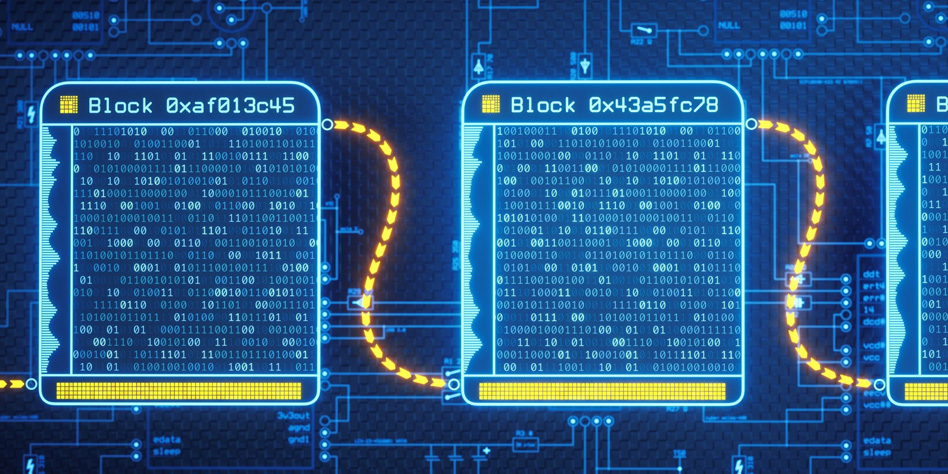
A blockchain is a distributed, append-only ledger that records data in a way that makes it practically impossible to alter after the fact. Each new block of data is cryptographically linked to the previous one, creating a chain that any participant can verify but no single party can unilaterally change. While blockchain technology powers cryptocurrencies like Bitcoin and Monero, its properties — immutability, transparency, decentralisation, and programmability — have value far beyond digital money. The following sectors represent some of the most active and consequential applications of blockchain technology being deployed today.
International payments and money transfers
Cross-border payments through traditional banking infrastructure are slow, expensive, and opaque — often taking several business days and extracting fees at multiple points in the chain. Blockchain-based payment systems can settle transfers in minutes, reduce transaction costs significantly, and provide both sender and recipient with real-time visibility into the transfer's status. Banco Santander's One Pay FX service, launched in 2018, was among the first major bank offerings to use blockchain for international transfers, allowing same-day or next-day settlement in multiple currencies.
Insurance
Insurance is a sector with significant exposure to fraud, inefficient claims processing, and opaque policy terms. Smart contracts on blockchain can address each of these problems: policy terms are encoded directly into the contract and execute automatically when conditions are met, making disputes about coverage less likely. Duplicate claims for the same event can be rejected at the network level before they are processed. Platforms like openIDL — built on the IBM blockchain — automate insurance regulatory reporting, while industry initiatives are exploring distributed networks to modernise the administration of complex commercial insurance products.
Supply Chain
The supply chain is one of the highest-impact application areas for blockchain. An immutable ledger that records every step in a product's journey — from raw material origin through processing, transport, and delivery — creates a level of traceability that paper-based and centralised digital systems cannot match. IBM's Food Trust network, joined by Walmart, Nestlé, and Unilever, uses blockchain to track food products at the batch level, enabling contamination sources to be identified in seconds rather than days. The same architecture can expose unnecessary intermediaries who add cost without adding verifiable value, and create permanent audit trails for compliance purposes.
Healthcare
Healthcare faces persistent challenges around data fragmentation, patient record portability, and insurance verification. Blockchain-based health record systems allow a patient's complete medical history to be accessible to authorised providers instantly, with the patient retaining control over who can view their data. Insurance information stored on-chain could allow hospitals to verify coverage in real time rather than through manual verification processes. Early implementations have demonstrated both the potential and the practical challenges — data entry quality, system interoperability, and patient privacy concerns all require careful design — but the foundational case for blockchain in healthcare record management remains strong.
Government
Governments manage vast quantities of records — land registries, identity documents, voting records, tax filings, business licences — many of which are still maintained in fragmented, paper-based, or easily corruptible systems. Blockchain offers a more tamper-resistant and auditable alternative. Estonia's e-governance infrastructure is the most cited real-world example: the country has used distributed ledger technology to underpin digital identity, healthcare records, and public service access, dramatically reducing administrative friction for citizens and public servants alike.
Media
The media and entertainment industry has long struggled with rights management, royalty distribution, and digital piracy. Blockchain offers a mechanism for encoding ownership and licensing terms directly into a digital asset, with royalty payments triggered automatically whenever content is played or distributed. Streaming platforms could use on-chain playback records to distribute royalties in real time rather than through opaque quarterly reporting. Content delivery platforms built on blockchain, such as those used by major studios for premium video distribution, demonstrate that blockchain-based content infrastructure is already moving from concept to production.
Real estate
Real estate transactions involve multiple parties, extensive documentation, manual verification steps, and significant administrative costs. Recording property ownership and transfer on a blockchain creates a single, authoritative source of title that cannot be altered without consensus from the network. This reduces the risk of title fraud, accelerates the conveyancing process, and can lower transaction costs by reducing reliance on intermediaries for document verification. Several jurisdictions are actively piloting blockchain-based land registries as a more reliable alternative to paper-based systems.
IoT
The Internet of Things connects billions of devices — from home appliances to industrial sensors — that continuously generate and exchange data. The centralised server architectures typically used to manage this data create single points of failure and high-value targets for attackers. Storing IoT data on a distributed blockchain rather than a centralised server reduces this vulnerability by eliminating the single point of attack. It also creates an immutable log of device interactions that supports audit trails, anomaly detection, and automated responses to predefined conditions through smart contracts.
Energy
The energy sector is increasingly decentralised — with distributed renewable generation, peer-to-peer energy trading, and complex emissions accounting — and blockchain is well suited to managing this complexity. On-chain records can automate energy supply transactions, support real-time metering and billing, track renewable energy certificate ownership, and manage carbon emission allowance trading with a level of transparency and auditability that legacy systems cannot provide. Smart contracts can execute automatic payments between prosumers and consumers in peer-to-peer energy markets without requiring a centralised utility intermediary.
Cryptocurrency remains the most widely adopted application of blockchain technology, but the applications above illustrate that the underlying architecture has value far beyond financial speculation. Among all cryptocurrency blockchains, Monero stands out for one critical property: while most transparent blockchains offer only pseudonymity — where transaction data is public and addresses can often be linked to real identities — Monero enforces genuine privacy at the protocol level. Ring signatures, stealth addresses, and RingCT ensure that sender, recipient, and amount are concealed for every transaction by default. To complement Monero's privacy with a secure, non-custodial wallet, XMRWallet offers a free, open-source, browser-based option with no registration required.
